
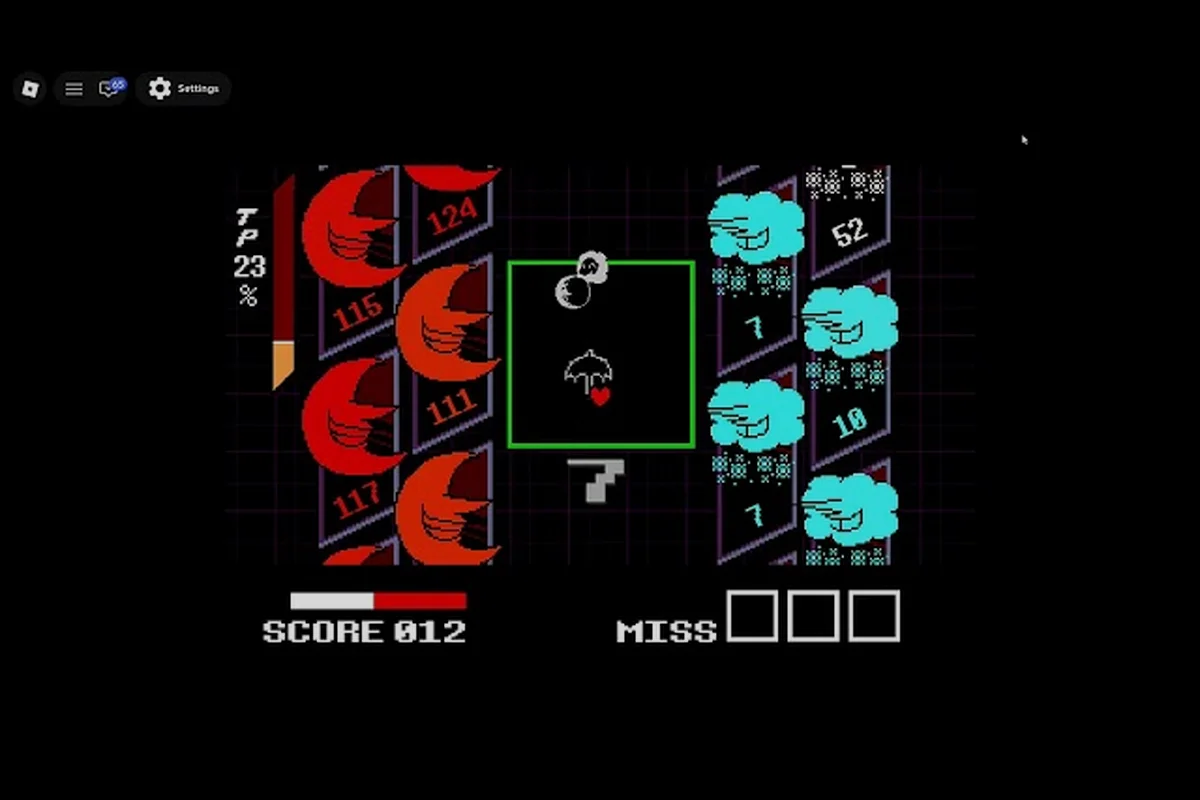
Understanding how damage flows through a fight matters more than memorizing any single attack pattern, especially when a boss shifts from bullet-hell survival turns into player attack windows. DELTARUNE Fight damage decisions ripple across every phase, because the game asks you to manage health, skill points, and mercy pressure at the same time. The confirmed line-up so far includes Tenna, King, Pink, and Kaizo Knight, and each one punishes hesitation differently.
How DELTARUNE Fight Damage Shapes Every Encounter
Damage in DELTARUNE Fight is not a static number you can look up on a stat screen, because the developer has not published official mechanic values anywhere. Instead, players learn damage through repetition, watching how a wide, high-damage swing behaves differently from a quick, low-threat projectile. According to community videos, the Soul cursor is the heart you steer during bullet phases, and every hit you take chips away at a health bar that never recovers on its own. That means damage avoidance is the real health system, not a healing rotation.
The HP system in this Roblox boss rush works as a pressure gauge rather than a resource you actively manage with potions or items. When a boss enters a high-pressure phase, the screen fills with patterns that demand pre-positioning before the attack even starts. Players who react late tend to eat multiple hits in a row, which is why experienced runners describe health as a mistake counter. The fewer mistakes you make, the less the HP bar matters, and the more you can commit to aggressive TP spending.
| Damage Source | What It Demands | Player Habit That Helps |
|---|---|---|
| Wide screen-spanning pattern | Pre-positioning before the phase starts | Watch the boss telegraph, not your Soul |
| Fast projectile burst | Short reaction window | Keep the Soul near open space |
| Delayed explosion | Patience and path planning | Move late, not early |
| Contact damage from boss body | Spatial awareness | Stay near screen edges when unsure |
Because damage avoidance is the core survival loop, the critical hits guide explores how attack timing and hitbox awareness can turn defensive movement into offensive openings. The two systems feed each other, since a player who dodges cleanly has more TP available for a punishing counter.
Reading the HP and TP Bars Without Official Numbers
The HP bar and TP bar sit at the heart of every DELTARUNE Fight decision, but the game refuses to attach visible numeric values to either one. Instead, the bars communicate through length, color shifts, and the way a boss reacts when a threshold is crossed. Players report that the hardest tier, Genocide, makes the HP bar feel shorter than it looks, because even a single mistake can end a run. That qualitative pressure is the real design language of the game.
The TP system works as a spendable resource for attacks, and community videos show the Rude Buster attack consuming TP in a way that rewards saving rather than spamming. When you spend TP on a big hit, you trade future flexibility for immediate damage, which matters most during survival turns that alternate with player attack turns. A player who dumps all TP early may find themselves unable to punish a staggered boss later.
| Bar | What It Tracks | How Players Read It |
|---|---|---|
| HP | Mistakes and survival pressure | Bar length, color shifts, near-death audio cues |
| TP | Attack availability and burst potential | Spend timing, attack selection, phase transitions |
The lack of official numbers means every deltarune fight damage discussion leans on community observation rather than datamined values. That is not a weakness, because the game teaches through encounter design instead of tooltips. A boss that suddenly speeds up after a certain HP threshold is communicating a phase change, and the bar itself becomes a timing tool rather than a math problem.
Why Timing Beats Raw Damage
Deltarune fight timing determines whether a hit lands cleanly or gets wasted on an invulnerable boss frame. According to community videos, Tenna alternates survival turns with player attack turns, which means your damage window is not always open. Players who swing during a survival turn lose TP and positioning, while players who wait for the attack turn land the same hit with full value.
The rhythm of a fight matters more than the size of the damage number, because every boss in the confirmed line-up has a different cadence. King punishes greedy players with delayed swings, while Kaizo Knight demands constant movement even during your own attack turns. Learning the rhythm means learning when the game will actually let you hurt the boss, and that knowledge transfers across difficulty tiers.
How Difficulty Tiers Reshape Damage Pressure
The three difficulty tier names from community videos are Standard, Brutal, and Genocide, and each one changes how damage feels without changing the underlying mechanics. Standard gives you room to learn patterns, Brutal tightens the reaction windows, and Genocide turns every hit into a potential run-ender. The difficulty differences guide breaks down how those tiers alter the same fights, which helps you decide when to push for a harder clear.
Because the game never shows a damage multiplier or a defense stat, players describe the tiers through feel. A hit that stings on Standard becomes a near-fatal blow on Genocide, and the HP bar reflects that pressure without ever displaying a number. That design choice keeps the focus on movement and timing, which is where DELTARUNE Fight actually lives.
Mercy and Pacifist Tradeoffs in a Boss Rush
The deltarune fight mercy question is tricky, because this Roblox game is a boss rush simulator rather than a story-driven RPG with spare mechanics. The original Deltarune features Kris, Susie, Ralsei, and Noelle as party members with ACT and MERCY menus, but this Roblox game does not confirm those characters as playable fighters. That means mercy here is not a menu option, but a strategic choice about how aggressively you spend TP and whether you prioritize survival over damage.
A deltarune fight pacifist run in this context means minimizing unnecessary damage taken, not sparing enemies through dialogue. Players who chase a clean, low-damage clear often describe it as a pacifist-style run, because the goal is to survive every phase without trading hits. The tradeoff is that aggressive TP spending can end a fight faster, which reduces the number of survival turns you have to endure.
| Run Style | What You Prioritize | Main Risk |
|---|---|---|
| Aggressive damage | Fast clears, high TP spending | More exposure to counterattacks |
| Pacifist-style survival | Clean dodges, minimal HP loss | Longer fights, more chances to slip |
| Balanced | Adaptive TP use per phase | Requires deep pattern knowledge |
The combat guide covers how to dodge and parry effectively, which is the foundation for any pacifist-style attempt. Without clean movement, a pacifist run becomes a slow defeat, because every survival turn chips away at a bar that never refills.
What Community Videos Reveal About Tenna
The only validated community video source for this article is a raw capture of the Tenna battle by Dimitar, which shows the television-themed boss leaning on wide, screen-spanning patterns. Tenna requires pre-positioning before a phase starts, because the projectiles fill so much space that reactive dodging fails. The fight alternates survival turns with player attack turns, which means damage timing is the entire fight.
Players watching the Tenna fight capture can see how the Soul cursor weaves between projectiles, and how a single late movement cascades into multiple hits. That video is the best public evidence of how DELTARUNE Fight damage works in practice, because it shows the full rhythm of a boss without any commentary overlay. The patterns speak for themselves, and they reward players who learn the telegraphs rather than the numbers.
Kaizo Knight and the Hardest Damage Checks
Kaizo Knight is the Knight's enhanced version, and community reports place it among the hardest damage checks in the confirmed line-up. The fight demands constant movement even during your own attack turns, which means you cannot simply wait for a safe window and unload. Every TP spend is a commitment, and every dodge is a positioning decision that sets up the next survival turn.
Because Kaizo Knight punishes hesitation, players often describe the fight as a test of deltarune fight timing more than raw damage output. The boss does not care how much TP you have saved if you cannot land the hit during the correct window. That design philosophy runs through the entire game, and Kaizo Knight is its purest expression.
Building a Damage Mindset for Every Boss
A damage mindset in DELTARUNE Fight means treating every hit you take as information, not just punishment. When a boss clips you with a specific pattern, that tells you where your positioning failed, and the next attempt gives you a chance to fix it. Players who tilt after a hit tend to take three more, because frustration shortens their reaction window and makes them move before the telegraph completes.
The confirmed bosses each teach a different lesson. King teaches patience with delayed swings, Pink teaches spatial awareness with tracking projectiles, Tenna teaches pre-positioning with screen-spanning patterns, and Kaizo Knight teaches commitment with constant pressure. Together, they form a curriculum that rewards players who treat damage as a teacher rather than a scoreboard.
| Boss | Core Lesson | Habit That Transfers |
|---|---|---|
| Tenna | Pre-position before phases | Read telegraphs early |
| King | Respect delayed swings | Move late, not early |
| Pink | Track multiple threats | Keep Soul near open space |
| Kaizo Knight | Commit to every action | Never hesitate on TP spends |
The endless mode guide explores how those lessons compound when you face a long stretch of bosses without a break. Endless mode turns damage avoidance into an endurance skill, because a single mistake early in the run can leave you limping into the hardest fights with no recovery.
The Role of Rude Buster in Damage Planning
Rude Buster is the community-video attack name that appears in DELTARUNE Fight, and it serves as a high-commitment TP spend that can skip the final segment of an attack. Players who save TP for Rude Buster can shorten a dangerous phase, which indirectly reduces the damage they take. The tradeoff is that saving TP means passing up smaller, safer damage opportunities earlier in the fight.
Because Rude Buster is a burst option, it works best when you know exactly which phase you want to skip. Wasting it on an early phase leaves you without a panic button later, while holding it too long means you eat damage you could have prevented. The decision is a microcosm of the entire damage system: every resource is a choice, and every choice has a cost.
Why the HP Bar Is a Timer, Not a Resource
The deltarune fight hp system never gives you a healing item or a recovery window, which means the bar functions as a timer for how long you can survive. Every hit shortens that timer, and no amount of TP spending can buy it back. That design choice makes damage avoidance the only real defensive tool, and it explains why pacifist-style runs feel so natural in this game.
Players who treat the HP bar as a resource to be managed often look for healing options that do not exist. The game wants you to treat it as a countdown, which shifts the focus to movement and timing. When you stop thinking about recovery and start thinking about avoidance, the entire fight becomes clearer.
Frequently Asked Questions
Does DELTARUNE Fight show damage numbers?
No, the game does not display numeric damage values anywhere. Players learn how much a hit hurts through the HP bar's visual response and the way a boss reacts to threshold changes, which keeps the focus on movement and timing rather than math.
How does the TP system work in DELTARUNE Fight?
TP is a spendable resource for attacks like Rude Buster, and it builds through successful actions during a fight. Saving TP for a high-commitment burst can skip a dangerous phase, while spending it early leaves you without a panic button later in the encounter.
Can you spare bosses in DELTARUNE Fight?
The game is a boss rush simulator, not a story-driven RPG with spare mechanics. The original Deltarune features Kris, Susie, Ralsei, and Noelle with ACT and MERCY menus, but this Roblox game does not confirm those characters as playable fighters or offer a spare option.
What is a pacifist run in DELTARUNE Fight?
A pacifist-style run means minimizing damage taken through clean dodges and careful TP use, not sparing enemies through dialogue. The tradeoff is longer fights with more survival turns, which increases the chance of a slip that ends the attempt.
Which boss has the hardest damage checks?
According to community reports, Kaizo Knight demands the most consistent movement and commitment, because the fight punishes hesitation even during your own attack turns. Tenna and King also test timing heavily, but Kaizo Knight is the purest pressure check in the confirmed line-up.
The damage system in DELTARUNE Fight rewards players who treat every hit as a lesson and every TP spend as a commitment. Learning the rhythm of each confirmed boss matters more than chasing numbers that do not exist, because the game communicates through pressure, telegraphs, and phase changes. Whether you chase aggressive clears or pacifist-style survival, the same foundation applies: move early, read the pattern, and never waste a damage window.