
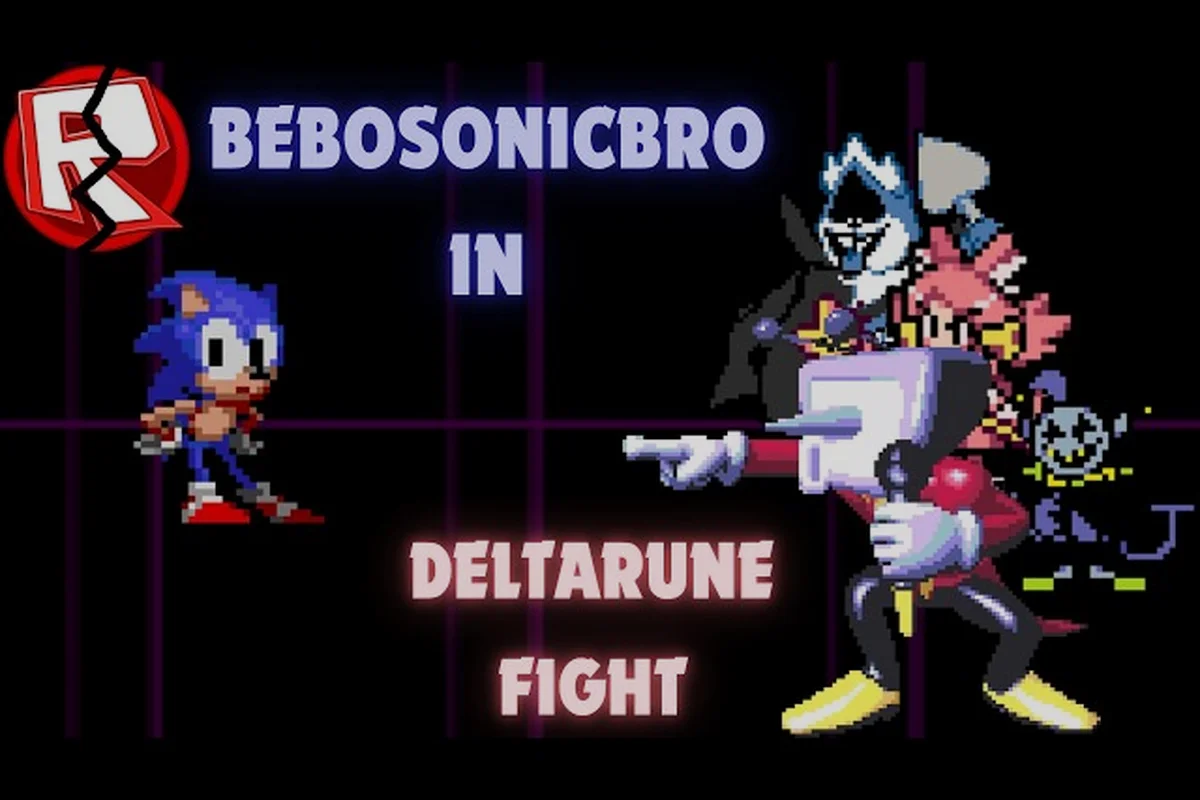
Starting DELTARUNE Fight on Roblox feels familiar if you have played the original Deltarune, but the combat loop here is built around a different rhythm. This deltarune fight beginner guide focuses on the first hour: learning the controls, understanding the Soul cursor, and surviving long enough to land your first boss win. The game launched on August 11, 2026, and has already pulled in more than 2.26 million visits, which means plenty of new players are stepping into the same early fights you are about to face. Getting the basics right now saves you from developing habits that will punish you in the harder difficulty tiers later.
Understanding the Core Control Setup
Before you worry about bosses or party composition, you need to internalize the control scheme because every fight in DELTARUNE Fight flows through the same three inputs. The controls are simple on paper: Z to confirm, X to go back, and C for the context-dependent action. That context-dependent action changes depending on where you are and what phase the fight is in, so your thumb or finger needs to find it without looking. According to community videos, the game does not bury you in menus, which means most of your learning happens inside the arena rather than in a settings screen.
The most important control concept is the Soul, which is the heart-shaped cursor you steer during bullet phases. In the original Deltarune, the Soul is a navigation and combat cursor, but in this Roblox adaptation it becomes your primary survival tool. You move the Soul through incoming projectile patterns while waiting for your turn to act. Because the Soul is small and the attack patterns can be dense, your first hour should prioritize smooth, deliberate movement over fast reactions. Jerky inputs will push you into projectiles that a calm, curved path would have avoided.
Mapping Your Hands Before the First Fight
Spend a few minutes in an empty area or an early encounter just pressing each input in sequence. Confirm with Z, cancel with X, and test the context action with C while standing near different objects. This sounds basic, but the habit of pressing the wrong key during a high-pressure phase is the most common early death reported by players. The game does not pause while you search for a button, so the goal is to make the three inputs feel automatic.
| Input | Primary Function | Beginner Habit to Build |
|---|---|---|
| Z | Confirm selections and advance dialogue | Press deliberately, never mash |
| X | Go back or cancel a menu | Use to reset a bad menu choice quickly |
| C | Context-dependent action in the arena | Learn what it does in each phase before the fight heats up |
The table above is not about memorizing commands; it is about building a mental model of when each input matters. The context action is the wildcard because its function shifts between exploration and combat. In one moment it might interact with an object, and in the next it might trigger an attack or a defensive option. Community video captures show that players who treat C as a panic button tend to waste their turn, while players who understand the current context spend their actions efficiently.
Choosing Your First Party and Understanding TP
DELTARUNE Fight does not confirm the original Deltarune cast as playable fighters, so you should not expect to load in as Kris, Susie, Ralsei, or Noelle with their original abilities. Those characters exist in the original Deltarune as background and role context, but this Roblox game has not confirmed them as selectable fighters with stats, skins, or skill tables. Instead, your first party pick should be based on what the game actually presents to you in the opening minutes, which according to community reports is a smaller set of available options than the original game's cast.
The resource you need to understand before committing to any party is TP, which stands for the skill points you spend on attacks. TP builds up as you land hits and survive phases, and it gates your stronger offensive options. A common beginner mistake is spending TP on the first available attack every single turn, which leaves you empty when the boss enters a phase that punishes low resources. Instead, treat TP as a pacing tool: spend it when you have a clean opening, and hold it when the boss is about to shift into a bullet-heavy sequence.
Reading the Flow of a Turn
Each turn in DELTARUNE Fight has a rhythm that you can learn by watching the boss rather than your own character. The boss telegraphs its next move, you steer the Soul through the incoming pattern, and then you get a window to act. That window is where TP spending matters most. If you spend TP too early, you might not have enough for a high-value attack later in the same turn cycle. If you hold TP forever, you are leaving damage on the table and extending the fight longer than necessary.
| Turn Phase | What You Control | What You Should Watch |
|---|---|---|
| Telegraph | Position the Soul safely | Boss movement and wind-up tells |
| Bullet Pattern | Steer the Soul through gaps | Projectile speed and spacing |
| Action Window | Choose attack or defend | Your current TP and boss state |
| Recovery | Reset position | Next telegraph start |
The table above is a simplified version of what community videos show, but it captures the core loop. The Action Window is where beginners lose the most value because they treat it as a free damage phase rather than a decision point. Sometimes the correct play is to spend a small amount of TP on a safe hit, and sometimes the correct play is to hold everything and reposition. The boss state matters more than your own impatience.
Surviving the First Boss Encounters
The confirmed boss line-up so far includes Tenna, King, Pink, and Kaizo Knight, and as of the September 2026 build those are the names you should expect to see in early and mid progression. This is not a closed roster claim; the game may add more bosses over time, but these four are the ones community videos and player reports consistently mention. Your first boss fight will likely be against one of the earlier entries in that line-up, and the habits you build there will carry into every later encounter.
The key to surviving early boss fights is recognizing that telegraphed attacks are your best friend. Every boss in the confirmed line-up has tells that signal what is coming next, and the game gives you a short window to react. According to community videos, the most reliable survival strategy is to watch the boss's wind-up animation rather than the projectiles themselves. The projectiles are the consequence; the wind-up is the information. If you learn to read the wind-up, you can start moving before the pattern even appears.
The Screen-Wide Sweep and the Tracking Volley
Two generic attack patterns show up repeatedly across the confirmed bosses, and both punish players who stand still. The first is the screen-wide sweep, a wide, high-damage swing that covers a large portion of the arena. The second is the tracking volley, a sequence of projectiles that follows your Soul's movement. Neither has an official name beyond the generic descriptions used in community videos, but the behavior is consistent enough that you can practice against them.
| Attack Pattern | What It Demands | Beginner Survival Habit |
|---|---|---|
| Screen-wide sweep | Move to a safe edge or gap | Start moving during the wind-up, not after |
| Tracking volley | Break line of sight or curve sharply | Change direction in a smooth arc |
| High-pressure phase | Manage multiple overlapping threats | Prioritize the nearest projectile first |
The high-pressure phase is not a specific named attack; it is the community term for the moment when a boss layers multiple patterns on top of each other. During that phase, your instinct will be to watch the entire screen at once, but that is exactly what gets you hit. Focus on the projectile closest to your Soul, clear that threat, then shift your attention to the next nearest danger. This triage approach keeps your movement calm even when the arena looks chaotic.
Building Timing Habits That Scale
The difference between a player who wins the first boss and a player who dies repeatedly is rarely mechanical skill. It is timing discipline. DELTARUNE Fight rewards players who respect the turn cycle and punish players who try to force damage during unsafe windows. The first hour is the perfect time to build the habit of waiting for the telegraph before committing to any movement or attack. If you move too early, you waste your positioning. If you move too late, you eat the hit.
One habit that scales well into the harder difficulty tiers is holding your TP during the opening phase of a boss fight. The opening phase is usually the least dangerous part of the encounter, which means it is the worst time to blow your strongest attacks. Instead, use the opening phase to learn the boss's rhythm, bank your TP, and identify which patterns give you the cleanest openings. Then, when the boss shifts into a more aggressive phase, you have the resources to punish it.
Practicing the First Hour Without Burning Out
The deltarune fight first hour guide approach is not about speedrunning to the first boss; it is about building a foundation that makes the first boss winnable. Spend your first few minutes in the controls, then run a few low-stakes encounters to feel the turn rhythm, and only then commit to a boss attempt. Players who rush into the boss with no warm-up tend to die to the first screen-wide sweep because they have not internalized the wind-up tells yet.
| Practice Focus | Time Investment | Expected Result |
|---|---|---|
| Control warm-up | A few minutes | Inputs feel automatic |
| Turn rhythm drills | Two or three encounters | You read telegraphs without panic |
| First boss attempt | One full attempt | You identify the boss's main patterns |
| Review and retry | One or two more attempts | You land the first win |
The table above is a pacing suggestion, not a strict schedule. The point is to avoid the trap of treating every boss attempt as a do-or-die run. Each attempt is data. If you die to a specific pattern, that is information about what to watch for next time. The deltarune fight new player guide mindset is iterative: you learn a little from each run, and the win comes when the patterns finally click.
Difficulty Tiers and What They Change
DELTARUNE Fight includes difficulty tier names that community videos report as Standard, Brutal, and Genocide. These are the only tier names you should treat as confirmed, and they represent a meaningful jump in pressure as you move up the list. The beginner experience lives in Standard, where the game gives you enough room to learn the core loop without overwhelming you. Brutal and Genocide are for players who have already internalized the timing habits and want to test their consistency.
The tiers do not change the fundamental controls or the Soul movement; they change the density and speed of the patterns you face. A screen-wide sweep that gives you a comfortable window in Standard might come out faster in Brutal, and the tracking volley might add more projectiles. Because the game does not publish exact numbers for these changes, the best preparation is to master the Standard patterns so thoroughly that the harder versions feel like variations rather than new threats.
When to Move Up a Tier
Do not move up a tier just because you won one boss fight. The jump from Standard to Brutal is significant, and players who rush it often bounce back down in frustration. A better benchmark is consistency: can you beat the first boss multiple times in a row without dying to avoidable patterns? If the answer is yes, you are ready to test the next tier. If the answer is no, stay in Standard and refine your timing.
| Tier | Community-Reported Feel | Best Time to Attempt |
|---|---|---|
| Standard | Forgiving windows, learnable patterns | Your first hour and early progression |
| Brutal | Faster patterns, tighter gaps | After consistent Standard wins |
| Genocide | The hardest tier, high pressure | After mastering Brutal timing |
The table above reflects community reports rather than official data, because the game does not publish tier-specific numbers. The deltarune fight roblox guide approach is to treat each tier as a separate learning curve. What works in Standard will not automatically work in Brutal, but the habits you build in Standard are the foundation for everything above it.
Frequently Asked Questions
What is the best way to start DELTARUNE Fight as a new player?
Start by learning the three core inputs: Z to confirm, X to go back, and C for the context-dependent action. Spend a few minutes in a low-pressure area pressing each one until it feels automatic. Then run a few early encounters to internalize the turn rhythm before attempting your first boss fight.
How do I dodge the screen-wide sweep attack?
Watch the boss's wind-up animation rather than the projectile itself. The wind-up tells you the sweep is coming before the hitbox appears, which gives you time to move toward a safe edge or gap. Start moving during the telegraph, not after the attack is already active.
Should I spend TP on every attack?
No. TP is a pacing resource, not a spam button. Save your TP during the opening phase of a boss fight while you learn its patterns, then spend it on high-value attacks when you have a clean opening. Holding TP during a bullet-heavy phase keeps your options open for the action window.
Which difficulty tier should a beginner choose?
Start with Standard. It gives you enough room to learn the Soul movement and telegraph patterns without overwhelming you. Move up to Brutal only after you can beat the first boss consistently in Standard, and save Genocide for when Brutal timing feels comfortable.
Are Kris, Susie, Ralsei, and Noelle playable in this Roblox game?
Those characters exist in the original Deltarune, but this Roblox game does not confirm them as playable fighters. Do not expect their original abilities, stats, or skill tables to carry over. Your first party pick should be based on what the game actually presents to you in the opening minutes.
The first hour of DELTARUNE Fight is about building the habits that make every later fight easier: reading telegraphs, pacing your TP, and steering the Soul with calm, deliberate movement. The confirmed boss line-up of Tenna, King, Pink, and Kaizo Knight will test those habits, but the patterns are learnable if you treat each attempt as data rather than a pass-or-fail run. For a broader look at how to approach the early game without dying, the deltarune fight early game guide walks through practice routines and survival priorities in more detail. Community video captures, including the Bebosonicbro in: Deltarune Fight capture, show the same core loop in action, and watching a clean run can help you internalize the rhythm before your own attempts.