
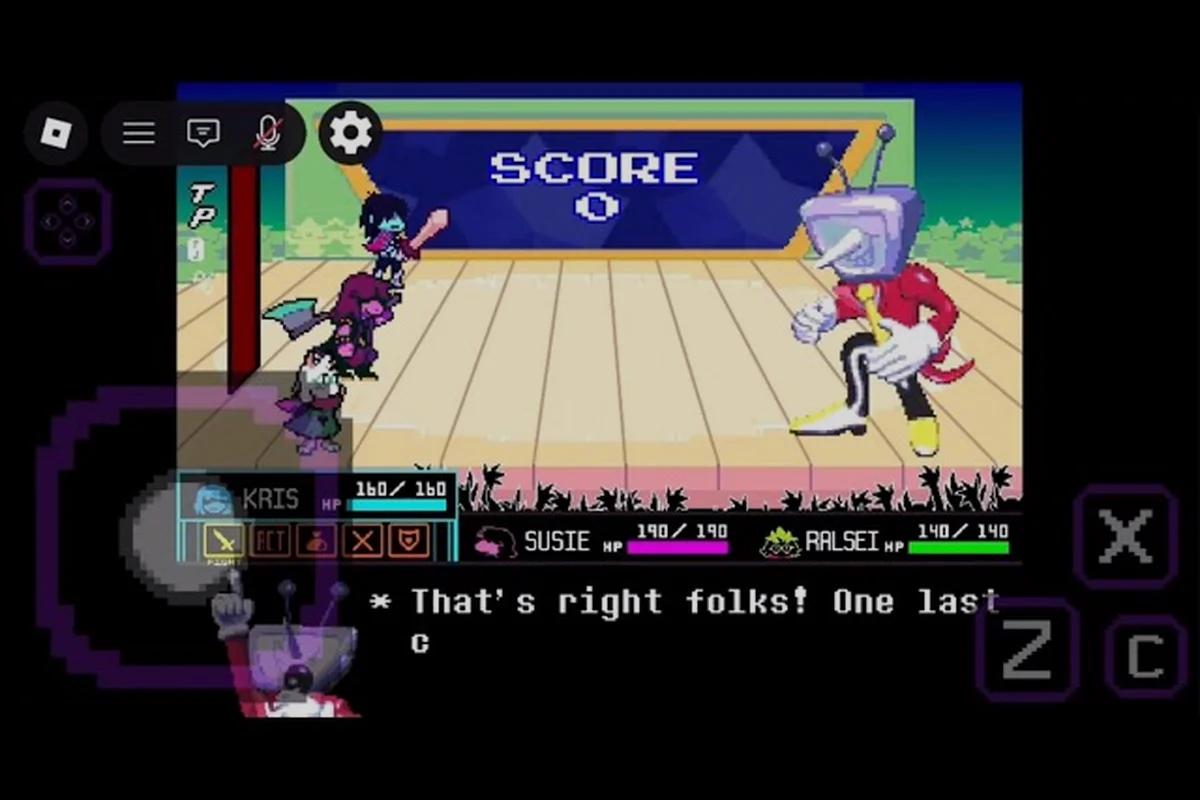
Winning in DELTARUNE Fight comes down to how cleanly you steer the Soul through bullet corridors while managing TP for attacks like Rude Buster. The game's boss-rush structure punishes sloppy movement and rewards players who treat every dodge as a setup for the next strike. These DELTARUNE Fight combat tips focus on the habits that separate consistent clears from frustrating resets, especially as you climb from Standard into Brutal and Genocide tiers.
Building a Movement Baseline Before You Touch Attacks
Most players lose runs because they treat the Soul cursor as a reactive tool instead of a positioning instrument. The heart-shaped cursor you steer during bullet phases defines every decision, and the first skill to internalize is where you default when no bullet is threatening you. According to community videos, players who hold a slightly off-center position tend to survive longer than those who hug the edges, because edge-hugging removes one escape direction and forces you into predictable corner turns.
A useful drill reported by players is to spend the opening seconds of any boss encounter doing nothing except steering the Soul in small, controlled loops. This builds a feel for acceleration and deceleration before the bullet density ramps up. The movement model in DELTARUNE Fight rewards short, deliberate adjustments rather than wide sweeping motions, because wide motions carry you into the next bullet before you can correct course.
The relationship between movement and attack timing is the core of advanced combat. You cannot spend TP on an attack while the Soul is trapped in a tight bullet corridor, so positioning discipline directly controls your damage output. Players who master this connection report that the hardest difficulty tiers feel less chaotic, because they are always choosing where the Soul goes instead of reacting to where it ended up.
| Movement Habit | What It Prevents | Why It Helps |
|---|---|---|
| Holding slightly off-center | Corner traps and edge locks | Keeps two escape directions open |
| Short controlled loops | Overshooting into bullets | Preserves reaction time for dense patterns |
| Returning to a neutral spot after each dodge | Drifting into unsafe zones | Resets positioning before the next wave |
| Avoiding edge-hugging | Predictable pathing | Makes bullet reads more forgiving |
This baseline matters because every boss in the confirmed line-up so far, including Tenna, King, Pink, and Kaizo Knight, tests positioning under pressure. The specific bullet patterns change, but the demand for clean Soul control stays constant. For a deeper look at how the command layer works, the combat guide breaks down the fight input flow in more detail.
Reading Bullet Patterns as a Decision Loop
The second major skill in DELTARUNE Fight advanced combat is treating every bullet sequence as a decision loop rather than a reflex test. When a boss telegraphs a spread attack, you have a short window to read the gaps before the bullets arrive. Players who wait for the pattern to fully form before moving tend to waste less movement, because they commit to a single clean escape instead of several panicked adjustments.
A community recording titled Roblox DELTARUNE Fight - Tenna Boss Brutal/Genocide (Full Fight) posted by Sevv shows how Tenna layers overlapping bullet sequences in the higher difficulty tiers. The recording illustrates that the safe pockets are not always where they first appear, and that committing too early to an opening often sends the Soul into a second wave that was already queued behind the first. Reading the full sequence before moving is a habit that transfers across every boss.
The decision loop works like this: observe the telegraph, identify the widest gap, move once, then reassess. Repeating this loop keeps your movement efficient and leaves mental bandwidth for attack planning. When you skip the observe step and react purely on instinct, you burn movement economy and end up in positions where attacking is impossible.
| Decision Loop Step | Common Mistake | Better Habit |
|---|---|---|
| Observe the telegraph | Moving before the pattern forms | Wait for the full spread to appear |
| Identify the widest gap | Aiming for the nearest gap | Choose the gap with the cleanest exit |
| Move once | Making several small corrections | Commit to one deliberate dodge |
| Reassess | Immediately attacking | Confirm the next wave before spending TP |
This loop is especially important against Kaizo Knight, which players report as the hardest damage check in the current build. The boss punishes players who overcommit to an attack window, because the follow-up pattern arrives faster than the recovery animation suggests. Treating each dodge as a complete decision cycle keeps you from being caught mid-attack.
Managing TP as a Positioning Resource
TP in DELTARUNE Fight is not just a damage currency; it is a positioning resource that shapes how aggressively you can play. Every attack you spend TP on locks the Soul into an animation, which means you are briefly unable to dodge. The best attacks are therefore the ones you can afford to commit to when the bullet pattern leaves a genuine opening, not simply the ones that deal the most visible damage.
Rude Buster is the community-video attack name that players most often cite as a high-commitment option. According to community videos, the attack can skip a final phase in certain encounters, but using it at the wrong moment leaves you exposed to a bullet wave you cannot avoid. The tradeoff is central to DELTARUNE Fight battle mechanics: higher damage output requires accepting a longer window of vulnerability.
A practical habit reported by players is to bank TP during the early phases of a boss fight, when bullet density is lower and dodging is easier. This creates a reserve you can spend during the high-pressure phase, when a quick Rude Buster can end the fight before the hardest patterns arrive. The alternative, spending TP as soon as it is available, often leaves you with no burst option when you need it most.
| TP Habit | When It Works | When It Fails |
|---|---|---|
| Banking early TP | Long fights with escalating phases | Short fights where early damage matters |
| Spending on cooldown | Low-pressure phases with safe windows | Dense bullet sections with no recovery time |
| Saving for Rude Buster | Final phases with tight damage checks | Early phases where chip damage adds up |
| Holding TP for emergencies | Unpredictable patterns | Predictable fights where you lose tempo |
The difficulty tier you are playing also changes the calculus. In Standard, you can afford to spend TP more freely because the bullet patterns are more forgiving. In Brutal and Genocide, the same attack commitment becomes riskier, and players report that holding TP for a clean window is often the difference between a clear and a reset.
Adapting Your Attack Rhythm Per Boss
Each confirmed boss in DELTARUNE Fight demands a different attack rhythm, and the best players adjust their timing rather than forcing a single rotation. King uses wide, telegraphed swings that leave clear safe pockets, which means you can afford to attack more frequently between dodges. Pink, by contrast, is reported by players to apply more continuous pressure, which forces you to shorten your attack windows and prioritize movement.
The rhythm adaptation is not about memorizing exact patterns, because the game's bullet sequences vary enough that rigid memorization fails. Instead, it is about recognizing the tempo of each boss and matching your attack frequency to the available gaps. When a boss gives you long recovery windows, you can chain attacks more aggressively. When the pressure is constant, you should treat every attack as a deliberate risk.
This is where the Soul cursor controls become the bridge between defense and offense. The same movement discipline that keeps you alive also determines when you can safely spend TP. Players who master this connection report that they stop thinking of dodging and attacking as separate activities, and instead see them as two halves of the same positioning decision.
| Boss | Reported Pressure Style | Recommended Rhythm |
|---|---|---|
| Tenna | Overlapping bullet sequences | Attack only after reading the full spread |
| King | Wide swings with clear pockets | Frequent attacks between telegraphed swings |
| Pink | Continuous pressure | Short attack windows, movement first |
| Kaizo Knight | Fast follow-up patterns | Minimal attack commitment, burst when safe |
The community recording of the Tenna encounter shows this rhythm adaptation in action. The player spends long stretches purely dodging, then commits to Rude Buster only when the bullet pattern opens a genuine gap. That patience is the core of DELTARUNE Fight advanced combat, and it is a habit that carries across every boss in the confirmed line-up so far.
Turning Difficulty Tiers into a Training Progression
The three difficulty tiers, Standard, Brutal, and Genocide, are best treated as a training progression rather than a simple difficulty slider. Starting on Standard lets you learn each boss's basic patterns without the added pressure of dense bullet overlaps. Moving to Brutal introduces the overlapping sequences that demand the decision loop described earlier. Genocide is the hardest tier, where the same patterns arrive faster and leave smaller safe pockets.
Players report that jumping straight into Genocide teaches bad habits, because the pressure forces you to rely on reflexes instead of building the positioning discipline that makes higher tiers manageable. The better path is to clear each boss on Standard first, then use Brutal to practice reading patterns under moderate pressure, and finally attempt Genocide once the decision loop feels automatic.
The performance side of this progression also matters. If your inputs feel delayed or the game stutters during dense bullet sections, your movement discipline will not translate into survival. The performance tips guide covers how to reduce input lag and remap controls, which is worth reviewing before you commit to Genocide attempts.
| Difficulty Tier | What It Adds | Best Use |
|---|---|---|
| Standard | Basic patterns, forgiving gaps | Learn boss movesets and attack timing |
| Brutal | Overlapping bullet sequences | Practice the full decision loop |
| Genocide | Faster patterns, smaller pockets | Test mastery under maximum pressure |
This progression mindset also applies to individual attacks. Rude Buster is easier to time on Standard, where the recovery window is less punishing. By the time you reach Genocide, you should know exactly when the attack is safe to commit and when it is better to hold TP and keep dodging. That knowledge, not raw reaction speed, is what separates consistent players from those who reset repeatedly.
Frequently Asked Questions
What are the best DELTARUNE Fight combat tips for beginners?
Start by mastering Soul cursor movement before worrying about damage. Hold a slightly off-center position, practice short controlled loops, and avoid edge-hugging. Spend your early runs on Standard learning each boss's basic patterns, then move to Brutal once dodging feels automatic rather than reactive.
How do I use Rude Buster without getting hit?
Only commit to Rude Buster when the bullet pattern leaves a genuine opening, because the attack locks your Soul into an animation. Bank TP during low-pressure phases, then spend it during the high-pressure phase when a quick burst can end the fight before the hardest patterns arrive.
What is the difference between Brutal and Genocide difficulty?
According to community videos, Brutal introduces overlapping bullet sequences that demand reading the full spread before moving. Genocide is the hardest tier, where the same patterns arrive faster and leave smaller safe pockets. Players report that Genocide punishes overcommitment more harshly, so attack rhythm must be more conservative.
Which boss is the hardest in DELTARUNE Fight?
Players report that Kaizo Knight is the hardest damage check in the current build, because its follow-up patterns arrive faster than the recovery animation suggests. Tenna is also demanding due to overlapping bullet sequences, while King and Pink test different aspects of movement and attack timing.
Do I need to memorize every bullet pattern to win?
No, because the game's bullet sequences vary enough that rigid memorization fails. Instead, build a decision loop: observe the telegraph, identify the widest gap, move once, then reassess. This habit transfers across every boss and difficulty tier, which makes it more valuable than pattern memorization.