
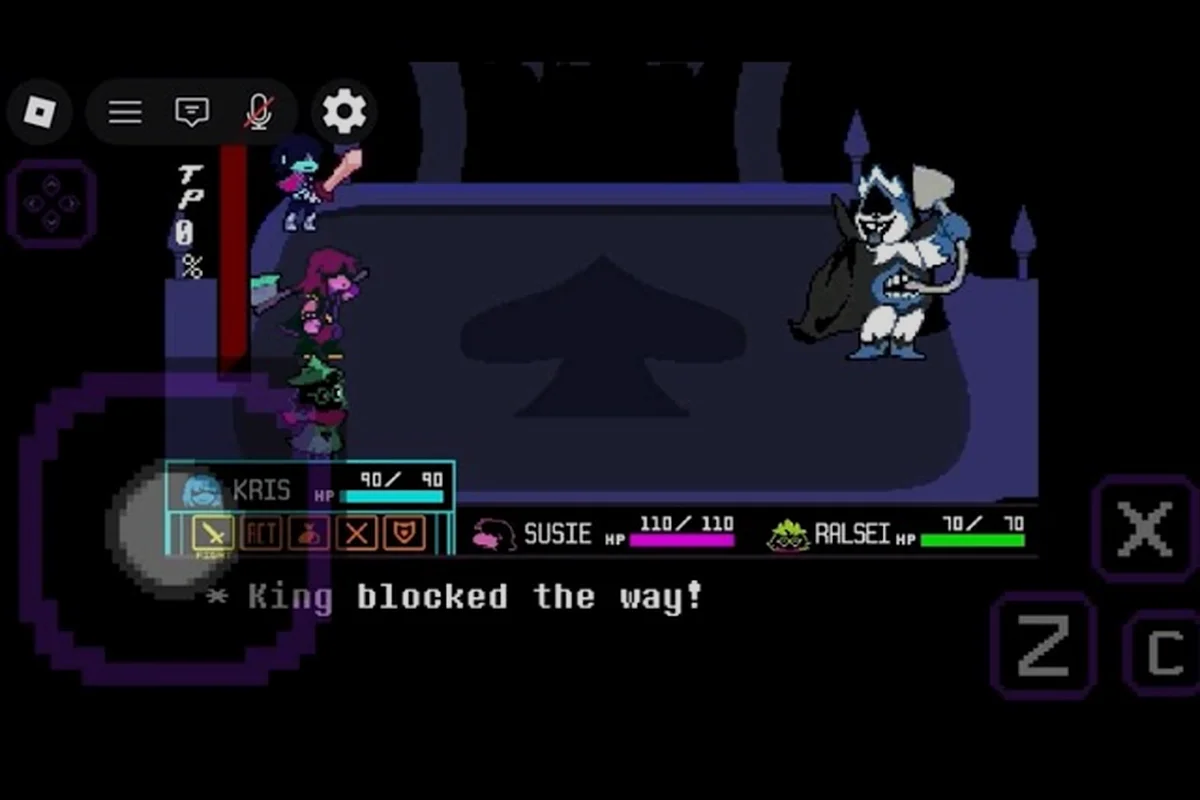
The challenge mode system in DELTARUNE Fight turns a straightforward Roblox boss-rush into a layered test of pattern recognition and composure. Understanding how difficulty settings reshape each encounter matters because the same boss can demand completely different movement habits depending on the tier you select. Community videos show that players who treat every mode as a separate learning curve tend to clear the hardest tiers far more consistently than those who brute-force their way through.
How DELTARUNE Fight Challenge Modes Reshape Each Fight
The core loop of DELTARUNE Fight stays consistent across every tier: you steer the Soul through bullet patterns while spending TP on attacks, and you confirm actions with Z, back out with X, and trigger a context-dependent action with C. What changes between challenge modes is not the control scheme but the pressure curve. According to community videos, the Standard tier gives you readable telegraphs and generous recovery windows, while Brutal compresses those windows and layers additional projectile patterns over the same arena. The Genocide tier pushes that compression further, forcing you to treat every dodge as a near-miss.
Because the game publishes no official mechanic numbers anywhere, every observation here comes from player reports and video captures as of the September 2026 build. That qualitative framing is actually useful: it means you should evaluate each tier by how it feels rather than by chasing a specific damage threshold. A wide, high-damage swing on Brutal might cover most of the arena, while the same attack on Standard leaves a comfortable pocket near the edge. Learning where those pockets exist is the entire skill curve.
| Tier Name | Telegraph Clarity | Arena Coverage | Recovery Window |
|---|---|---|---|
| Standard | Readable and early | Moderate | Generous |
| Brutal | Shorter and layered | High | Tight |
| Genocide | Minimal and deceptive | Very high | Near-instant |
Players who jump straight from Standard to Genocide often report feeling like the game suddenly became unfair, but the real issue is that they skipped the intermediate pattern language. Brutal teaches you to recognize overlapping projectile shapes, and that recognition carries directly into the hardest tier. The confirmed boss line-up so far includes Tenna, King, Pink, and Kaizo Knight, and each one tests a different aspect of that recognition under pressure.
What Each Confirmed Boss Demands
King is frequently cited in community videos as the first real difficulty wall because his patterns are slower than later bosses but cover more of the arena. Mistimed dodges against King tend to produce chip damage that accumulates across the fight, which punishes players who try to tank hits instead of repositioning. Tenna, by contrast, leans into tracking volleys that force you to keep moving rather than camping in a safe corner. Pink and Kaizo Knight escalate the pace further, with Kaizo Knight acting as a high-difficulty check that assumes you have already internalized the earlier bosses' rhythms.
DELTARUNE Fight Difficulty Settings and the Mid-Run Swap Question
One of the most common questions players ask is how to change difficulty in DELTARUNE Fight, and the answer is less about a hidden menu than about understanding what the game actually lets you control. According to community videos, the difficulty tier is selected before a fight begins, and there is no confirmed in-fight toggle that lets you drop from Genocide to Standard mid-attempt. That means your difficulty settings function as a commitment: you pick the pressure level, and the game holds you to it for that run.
This design choice has a direct impact on how you should approach progression. Because you cannot bail out of a bad Genocide attempt by swapping to an easier tier, the smarter path is to treat each tier as its own practice environment. Run Standard until the boss patterns feel automatic, then move to Brutal and accept that you will fail more often while your reaction time catches up. The deltarune fight difficulty differences guide explores how each tier changes the same encounter in more detail, but the short version is that the gap between tiers is qualitative, not just numerical.
| Habit | Standard Result | Brutal Result | Genocide Result |
|---|---|---|---|
| Camping in one corner | Works for short stretches | Punished by tracking volleys | Almost always fatal |
| Reacting to telegraphs | Comfortable | Requires early reads | Requires prediction |
| Spending TP aggressively | Safe | Risky but viable | Often punished |
| Saving TP for openings | Optional | Recommended | Nearly mandatory |
The Rude Buster attack, which community videos identify as a named option in the fight, becomes more valuable as difficulty rises because it can skip a final-phase segment when timed well. On Standard you might use it whenever the TP bar fills, but on Genocide you want to hold it for the exact moment a boss transitions into its most dangerous pattern. That shift from reactive spending to planned spending is one of the clearest markers of a player who understands DELTARUNE Fight challenge modes.
Route Differences: Genocide, Pacifist, and What Actually Changes
The terms genocide and pacifist carry a lot of baggage from the original Deltarune, but in this Roblox game they refer to difficulty and route choices rather than a full narrative branching system. According to community videos, the Genocide tier is the hardest available setting, while a pacifist-style approach maps more closely to clearing fights on lower pressure tiers without leaning on aggressive TP dumps. The route differences are expressed through which bosses you fight and how hard they hit, not through a story flag that permanently alters your save.
DELTARUNE Fight Mode Rewards and the Incentive to Climb
Rewards in DELTARUNE Fight are not published as a drop table anywhere, so any specific claim about what a given tier drops would be a fabrication. What community videos do show is that higher tiers are the context where players chase cleaner clears and faster times, which suggests that the reward structure is tied to performance rather than a simple tier-based payout. Players report that clearing a boss on Brutal or Genocide feels like the intended endgame, while Standard functions as the onboarding ramp.
Because the game has no confirmed shop vendors or currency systems, the practical reward for climbing difficulty is mastery itself. That might sound abstract, but it has real consequences for how you spend your time. A player who can clear Kaizo Knight on Genocide has effectively proven they understand every pattern in the game, and that proof is the reward. The deltarune fight all routes overview breaks down how different route choices interact with boss availability, which is useful context if you are planning a full clear.
| Reward Type | Confirmed in Community Videos | Notes |
|---|---|---|
| Cosmetic drops | Not confirmed | No evidence of tier-specific cosmetics |
| Currency payouts | Not confirmed | No shop or currency system observed |
| Bragging rights | Confirmed | Higher tiers are the prestige goal |
| Faster clear times | Confirmed | Players chase cleaner runs on Brutal/Genocide |
The absence of confirmed material rewards does not make the climb pointless. In a game built around pattern mastery, the reward is the run itself, and the tier you choose determines how much that run asks of you. Players who treat Genocide as a checklist item tend to burn out, while those who treat it as a long-term skill goal tend to stick with the game longer.
Practical Progression Through DELTARUNE Fight Challenge Modes
A sensible progression path starts with accepting that you will spend most of your early hours on Standard. That tier exists to teach you the shape of each boss's patterns without overwhelming your reaction time. Once you can clear the confirmed line-up on Standard without panic-dodging, move to Brutal and expect the same bosses to feel almost new. The brutal vs genocide comparison explains why the jump between those two tiers is often the steepest in the game.
The most effective habit reported by players is to record your own attempts, or at least to mentally note which specific pattern kills you each time. Because the game gives you no damage numbers, your only feedback is positional: were you standing too close to the edge when the screen-wide sweep came out? Did you spend TP on an attack when you should have saved it for a dodge? Those questions are the real difficulty settings, and answering them consistently is how you climb.
-
Learn the telegraph language first: every boss in the confirmed line-up signals its attacks, and the tier you pick determines how much time you get to react.
-
Treat TP as a defensive resource on higher tiers: holding TP for a well-timed Rude Buster can skip a dangerous phase entirely.
-
Practice one boss at a time: jumping between bosses on Genocide dilutes your pattern memory and slows your progress.
-
Accept that Brutal is the bridge: skipping from Standard to Genocide skips the tier that teaches you overlapping pattern recognition.
The Kaizo Knight Check and the Endgame Mindset
Kaizo Knight functions as the current endgame check because the fight assumes you have already mastered the habits that earlier bosses teach. Community videos show players who clear Kaizo Knight on Brutal or Genocide moving with a kind of economy that is absent from Standard clears: they dodge only as much as necessary, spend TP only when a phase transition is imminent, and never panic when the arena fills with projectiles. That economy is the real reward of the challenge mode system, and it only develops through repeated exposure to pressure.
Why Route Differences Matter More Than Endings
The phrase "genocide ending" and "pacifist ending" suggests a narrative conclusion, but DELTARUNE Fight does not present a confirmed story resolution tied to your difficulty choice. Instead, the route differences show up in how you approach each fight and which bosses you prioritize. A player chasing the hardest available content will naturally gravitate toward the Genocide tier, while a player focused on clean, low-pressure clears will stay on Standard or Brutal. Neither choice is wrong, but they produce very different experiences of the same game.
According to community videos, the confirmed boss line-up so far includes King as the early wall and Kaizo Knight as the late check, with Tenna and Pink filling the middle. That structure means your route through the game is partly determined by which bosses you choose to master first. A player who grinds King on Genocide before touching Tenna will have a very different learning curve than one who clears everything on Standard first and then climbs. The all boss fights breakdown covers each confirmed boss in more detail, but the key point is that route differences are about sequencing, not story flags.
| Route Style | Typical Tier Choice | Primary Challenge | Player Profile |
|---|---|---|---|
| Full clear on Standard | Standard | Learning all patterns | Newer players |
| Brutal climb | Brutal | Overlapping patterns | Intermediate players |
| Genocide rush | Genocide | Minimal reaction windows | Experienced players |
| Boss-specific grind | Mixed | Mastering one boss deeply | Specialists |
The external community capture Roblox DELTARUNE Fight - King Boss Brutal/Genocide (Full Fight) shows exactly how the same King fight changes between the two hardest tiers, and it is worth watching if you want to see the pattern compression in action. The video does not provide numbers, but it demonstrates the qualitative gap that makes Genocide feel so much more demanding than Brutal.
Frequently Asked Questions
What are the DELTARUNE Fight challenge modes?
The challenge modes are the difficulty tiers you select before a fight. Community videos confirm Standard, Brutal, and Genocide as the known tiers, with Standard offering readable telegraphs and Genocide compressing reaction windows to near-instant. Each tier changes pattern speed and arena coverage rather than introducing entirely new attacks.
How do I change difficulty in DELTARUNE Fight?
You select the difficulty tier before a fight begins, and there is no confirmed mid-fight toggle. According to community videos, the tier choice is a commitment for that run, so the practical way to change difficulty is to finish or restart the attempt and select a different tier on the next attempt.
What rewards do higher difficulty modes give?
No confirmed material rewards are tied to specific tiers. Community videos show players chasing cleaner clears and faster times on Brutal and Genocide, which suggests the reward is performance-based prestige rather than a drop table. The game has no confirmed shop or currency system as of the September 2026 build.
Is there a genocide ending or pacifist ending in DELTARUNE Fight?
The game does not present a confirmed narrative ending tied to difficulty choice. The terms genocide and pacifist refer to tier and route differences rather than story flags. A pacifist-style approach maps to lower-pressure clears, while Genocide is the hardest available tier, but neither produces a distinct story conclusion.
What is the difference between Brutal and Genocide?
Brutal compresses telegraph windows and layers overlapping projectile patterns, while Genocide pushes that compression further with minimal recovery time. According to community videos, the jump from Brutal to Genocide is the steepest in the game because Genocide demands predictive dodging rather than reactive movement, and punishes TP mismanagement more harshly.